


Archives
-
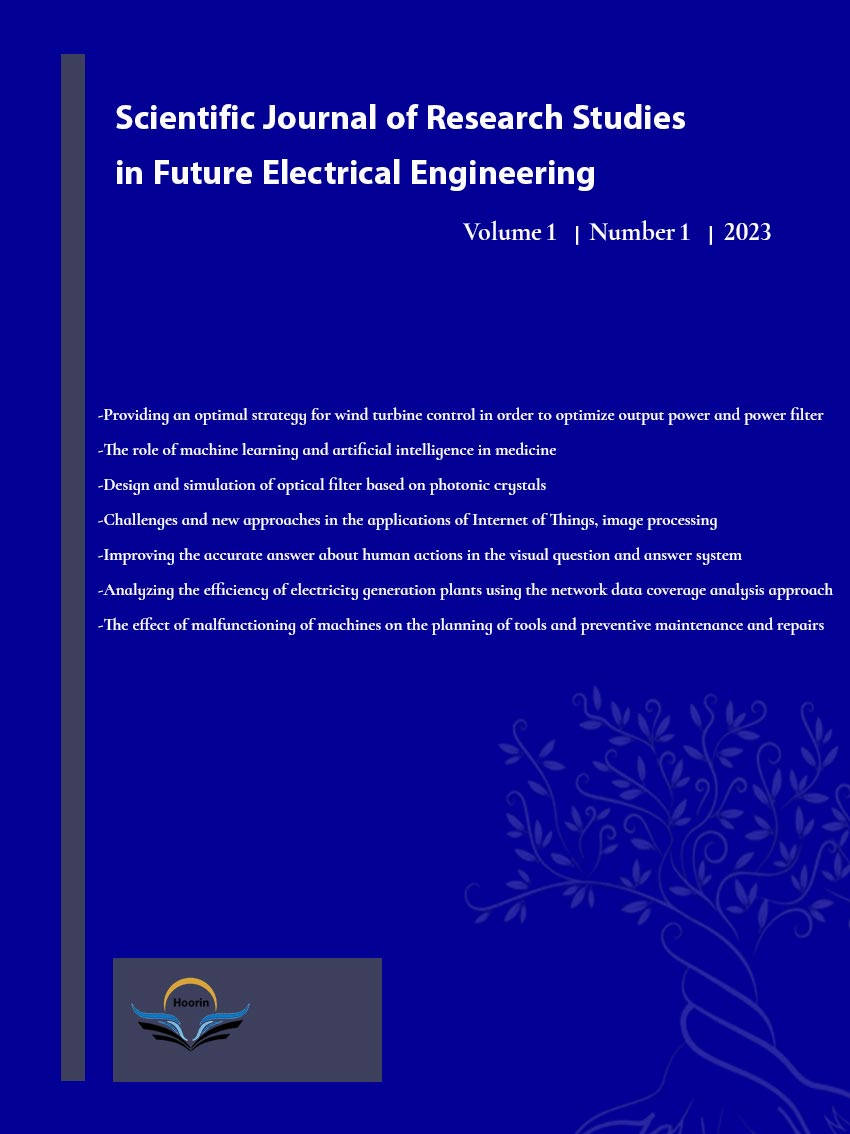
Vol. 1 No. 1 (2023)
This issue presents scholarly contributions in renewable energy systems, artificial intelligence, image processing, Internet of Things (IoT), power engineering, and industrial optimization. The published studies propose an optimal control strategy for wind turbines aimed at maximizing output power and improving power quality, and evaluate the efficiency of power generation plants using a network-based Data Envelopment Analysis (DEA) approach.
The issue further explores the role of machine learning and artificial intelligence in medical applications, and analyzes the design and simulation of optical filters based on photonic crystals. Emerging challenges and innovative approaches in IoT, image processing, and machine learning applications are examined, alongside improvements in accuracy for visual question answering systems in recognizing human actions.
Additional contributions investigate the impact of machinery performance disruptions on production planning and preventive maintenance systems within industrial environments. All contributions have undergone a rigorous peer-review process and aim to provide technology-driven and solution-oriented insights for enhancing energy efficiency, intelligent system performance, and industrial operational reliability.
-

Vol. 2 No. 1 (2024)
This issue presents scholarly contributions in electrical engineering, industrial energy systems, medical machine learning, and advanced intelligent control systems. The published studies address efficiency enhancement in electrical power distribution within large-scale industrial settings, analyzing practical techniques, operational challenges, and optimization strategies in high-availability process environments.
The issue further evaluates machine learning–based COVID-19 detection systems and provides analytical simulations of advanced deep neural network approaches for PSVT arrhythmia detection, with emphasis on innovative feature extraction and classification techniques. Additionally, the design and implementation of an intelligent adaptive control system for optimizing radiotherapy dosage based on patient biofeedback are examined from both technical and clinical perspectives.
Moreover, performance optimization of distributed control systems (DCS) based on PCS7 architecture using redundant S7-400H controllers in high-reliability process units is investigated as a strategy to enhance operational stability and system resilience.
All contributions have undergone a rigorous peer-review process and aim to deliver technology-driven and application-oriented solutions for industrial efficiency, medical diagnostic accuracy, and advanced control system reliability.