


Archives
-
Vol. 1 No. 1 (2023)
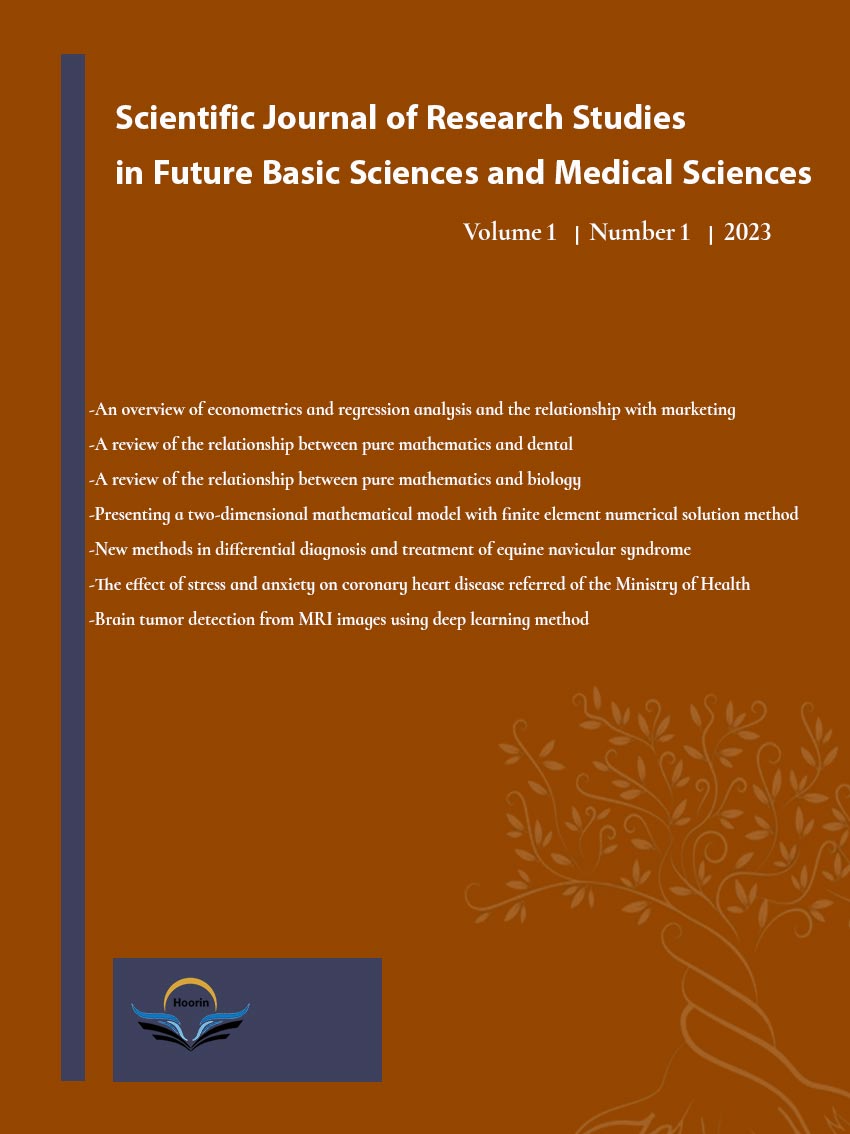
This issue presents interdisciplinary research bridging mathematical sciences, econometrics, biomedical applications, veterinary medicine, and artificial intelligence in medical imaging. The published studies provide analytical reviews of econometric methods and regression analysis in marketing research and explore the conceptual and structural connections between pure mathematics and applied fields such as dental implants and biological sciences.
The issue further introduces a two-dimensional mathematical model for conductive fluid analysis using finite element numerical methods. Advances in differential diagnosis and treatment approaches for equine navicular syndrome are also examined.
From a public health and medical technology perspective, the impact of stress and anxiety on COVID-19 incidence among callers to the national health hotline (4030) is analyzed, and deep learning–based methods for brain tumor detection using MRI images are evaluated.
All contributions have undergone a rigorous peer-review process and aim to strengthen the integration of mathematical modeling, data analytics, and intelligent systems within biomedical, economic, and applied scientific research domains.
-
Vol. 3 No. 1 (2025)
This issue presents interdisciplinary research in medical genetics, biotechnology, molecular and cellular sciences, clinical medicine, neuroscience, environmental health, and advanced therapeutic interventions. The published studies examine the role of heritability estimation in phenotypic trait analysis and environmental modulation, investigate genetic causes of tremor within an Iranian family, and identify genetic biomarkers associated with chronic multi-site pain using multi-gene analysis and protein interaction networks.
The issue further explores gene polymorphisms linked to male infertility, evaluates apoptosis–necrosis cell cycle assessment via flow cytometry in dermal fibroblasts, and assesses the regenerative effects of umbilical cord blood stem cells on liver tissue in experimental models. Clinical investigations address the relationship between body mass index (BMI) and hepatic fibrosis progression in chronic hepatitis B patients, as well as the impact of intraventricular morphine administration on peripheral thyroid hormone regulation in animal models.
Additional contributions include neuroimaging approaches for identifying neural biomarkers of obsessive–compulsive disorder and associated cognitive–neural mechanisms, development of culturally adapted family-centered interventions to enhance psychological resilience among families of cancer patients, and evaluation of advanced moisture-balance protocols in chronic wound care management.
Further topics encompass recent advances in the synthesis of nitrogen-containing heterocyclic compounds with pharmaceutical applications, genetic diversity of fibrinolytic enzyme-producing strains for thrombotic disorder management, global export opportunities and challenges in agricultural commodities, and environmental impacts and sustainability considerations within the pharmaceutical industry.
All contributions have undergone a rigorous peer-review process and aim to advance translational biomedical research, enhance therapeutic effectiveness, and strengthen the integration of basic science discoveries with clinical and public health applications.
-

Vol. 2 No. 1 (2024)
This issue presents interdisciplinary research spanning agricultural sciences, biomedical research, nanotechnology, medical image processing, risk management, mineral exploration, and theoretical physics. The published studies examine the relationship between saffron quality, harvesting time, and harvesting methods in Iran, and analyze hormonal treatments affecting bioactive compounds in coriander plants.
In the medical domain, comprehensive reviews address peptic ulcer disease and its pathogenic factors, ulcerative colitis inflammation and its association with gastrointestinal cancers, risk factors for breast cancer, and the application of nanomaterials as drug delivery systems in diabetes treatment and diabetic wound healing. A comparative study of Seyyed Esmaeil Jorjani and Avicenna on the diagnostic and therapeutic pathways of hepatic disorders in classical Islamic medical texts is also included.
Technological contributions present a data mining–based image processing approach for brain tumor classification in MRI scans, evaluate risk components and human risk-taking behavior within medical university environments, and analyze trends in mineral exploration and investment patterns in Iran and globally.
Further topics explore theoretical physics concepts, including stress–energy tensor analysis and conservation principles in classical and quantum frameworks, as well as supersymmetry breaking in particle physics through analytical model reviews.
All contributions have undergone a rigorous peer-review process and aim to advance interdisciplinary scholarship across fundamental sciences, applied technologies, and biomedical research frontiers.