


Archives
-

Vol. 2 No. 1 (2024)
This issue presents interdisciplinary research in industrial biotechnology, environmental engineering, therapeutic architecture, plant physiology, and data-driven management within agro-industrial systems. The published studies investigate hyaluronic acid production through fermentation processes and analyze key parameters influencing yield, recovery, and purification efficiency. Environmental air pollution challenges in refinery industries are also examined from regulatory and control perspectives.
The issue further explores the relationship between sustainable architecture, structural design, and mental health in elderly care facilities, emphasizing psychotherapy-informed design principles, and evaluates structural and therapeutic considerations in the architectural design of modern clinical facilities. Additionally, the impact of dynamic nutrient flux in the root zone on carbon allocation and performance efficiency in major crop species is assessed.
Another contribution analyzes the data-driven integration of intelligent performance dashboards and organizational agility frameworks to enhance operational efficiency within Iran’s agro-industrial sugarcane sector.
All contributions have undergone a rigorous peer-review process and aim to advance biological productivity, environmental sustainability, therapeutic spatial design, and intelligent management systems across industrial and agricultural domains.
-
Vol. 1 No. 1 (2023)
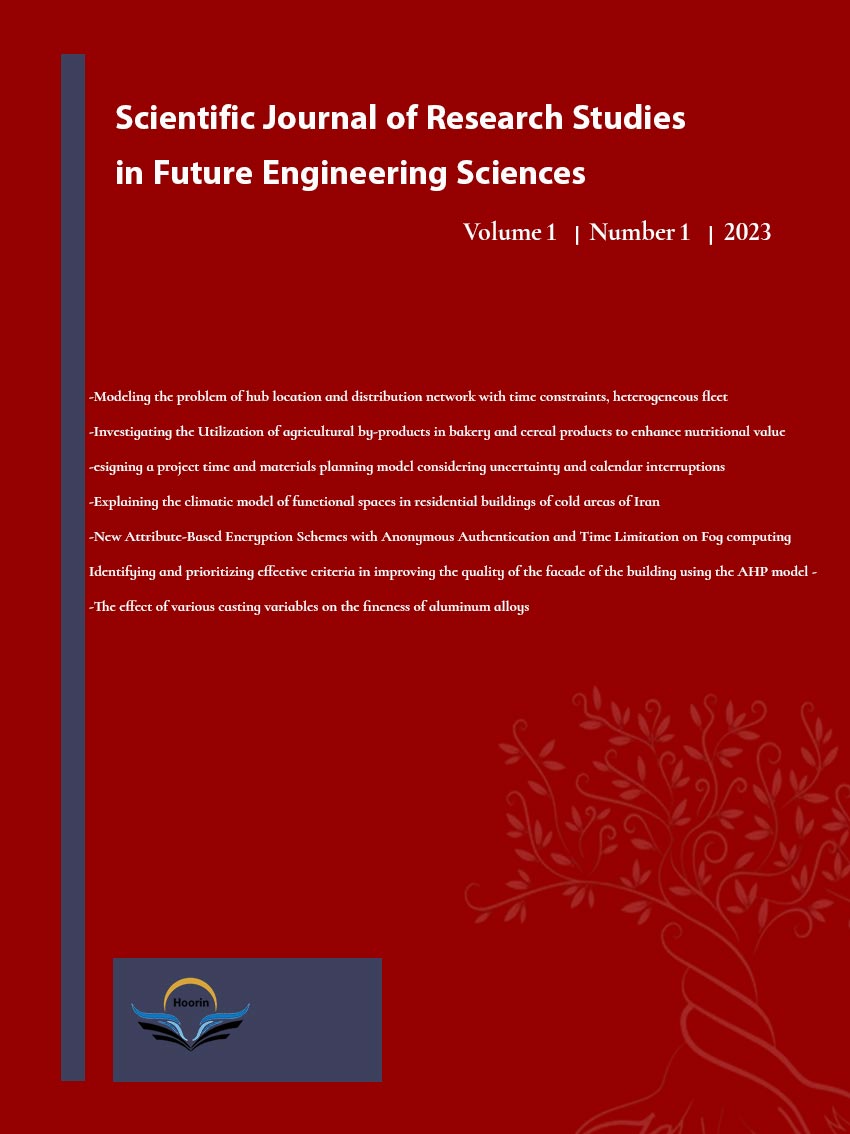
This issue presents interdisciplinary research in logistics network optimization, agro-food industries, industrial project management under uncertainty, climate-responsive architecture, cloud-based cryptographic security, and materials engineering. The published studies develop and solve hub location and distribution network models considering time constraints, heterogeneous fleets, and product diversity, with a case study in Iran’s grain sector.
The issue further explores the utilization of agricultural waste in the flour and grain industry to enhance nutritional properties and proposes a project time-and-material planning model under uncertainty and calendar disruptions, applied to oil resource maintenance projects. Climate-based spatial organization patterns in residential buildings located in cold regions of Iran are also examined.
Additional contributions introduce novel attribute-based encryption schemes with anonymous authentication and time constraints in fog computing environments, analyze the impact of casting variables on grain refinement in aluminum alloys, and identify and prioritize criteria affecting façade quality improvement using the Analytic Hierarchy Process (AHP).
All contributions have undergone a rigorous peer-review process and aim to enhance logistical efficiency, industrial sustainability, cybersecurity robustness, and built-environment quality through analytical, data-driven, and application-oriented research.